



Introduction
Totally Accurate Battle Simulator, better known as TABS, is one of the most deceptively chaotic strategy games ever created. At first glance, its ragdoll physics, silly wobbling warriors, and unpredictable interactions make it appear like a comedy simulation. But behind this absurdity lies a surprisingly deep battlefield sandbox filled with hidden mechanics, unit-specific behaviors, physics exploits, and advanced tactics that reward players who think creatively.
This guide is designed to give you a full progression path from beginner understanding to advanced battlefield mastery. You will learn how to analyze unit matchups, exploit faction strengths, use terrain to your advantage, construct synergistic armies, and manipulate simulation physics to win even against stronger forces. With ten detailed sections arranged logically—from fundamentals to expert-level tactics—this guide aims to turn you from a casual watcher of chaos into a deliberate commander capable of shaping it.
Whether you're playing campaign levels, sandbox experiments, or competitive challenges, these tips will help you gain control over the unpredictable world of TABS. Get ready to explore practical advice, hidden mechanics, strategic combos, and creative tricks that will elevate how you think about every battle.
1. Understanding the Core Physics Behind TABS
Physics is the backbone of TABS. To win fights, you must understand how ragdolls behave and how physical forces influence unit interactions.
Units fall, wobble, stagger, and collide depending on the power of attacks and their center of mass. A unit with strong knockback resistance, for example, won't be thrown aside by a catapult shot as easily as lighter units. Knowing this helps you decide when to use “heavy anchor units” like kings or minotaurs to soak up crowd-control effects.
Weapon momentum also plays a major role. A halberd swung while a unit is charging produces greater impact than a stationary jab. This means fast-moving attackers often outperform units with higher raw damage but slower animations.
Understanding the physics engine lets you predict how battle lines collapse, when units lose balance, and how hits stack. Once this foundation is clear, you can craft better army compositions.
2. Learning Unit Roles and How They Influence Strategy
Not all units are created for direct combat. They exist in specific functional categories you must learn to master.
Common Unit Roles
• Frontline tanks
• Ranged damage dealers
• Crowd-control disruptors
• High-mobility assassins
• Support units
• Summoners
• Siege weapons
Why Roles Matter
A balanced army does not simply throw random units into the field. Instead, each unit plays a role that supports or amplifies others. Tanks hold enemies in place, assassins disrupt key targets, and ranged units provide sustained pressure.
If you build armies based on roles rather than factions, your strategy becomes flexible and adaptable. As you progress through the guide, you’ll learn how to combine these roles into powerful formations.
3. Knowing Every Faction’s Strengths and Weaknesses
Each faction in TABS has a distinct design philosophy. Understanding this helps you predict unit interactions during battles.
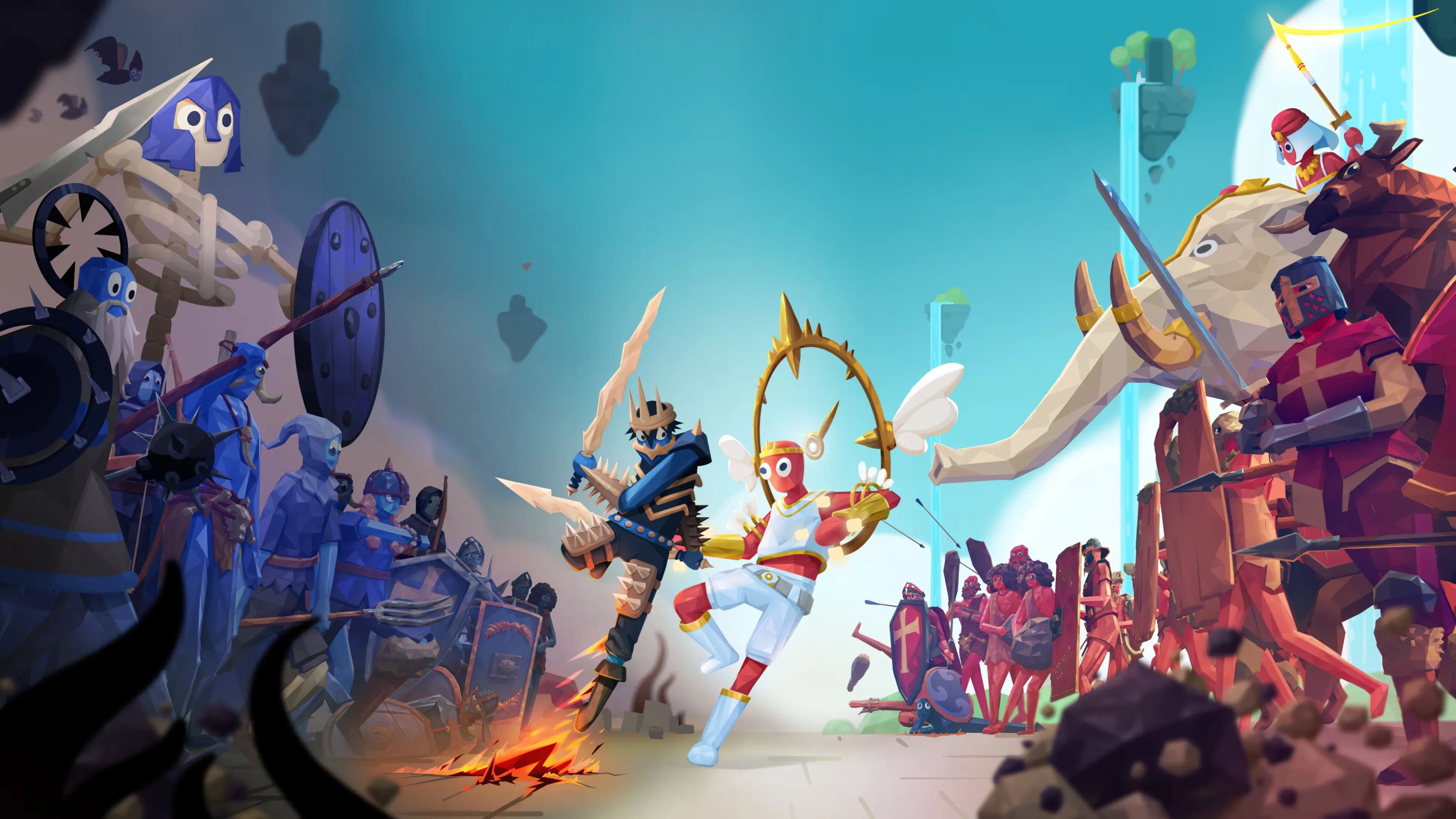
The Tribal faction excels at swarm tactics and disruption. Their cheap clubs and spears can overwhelm slower, expensive armies. Vikings rely on mobility and powerful mid-tier units like Valkyries, which can dominate the skies and distract ranged units. The Dynasty faction excels at agility and fast attacks, making them effective against heavily armored enemies.
Meanwhile, Medieval units are straightforward but reliable. Archers and knights give balanced compositions that are great for beginners. On the other hand, Ancient units offer strong control tools—minotaurs rush, snake archers disable, and ballistae provide long-range killing power.
Knowing faction identities allows you to predict matchups. For example, if you know a level contains heavy shields, avoid factions that rely mostly on projectiles; instead, use explosive or flank-oriented units.
4. Using Terrain to Control the Battlefield
Terrain is one of the most powerful strategic elements in TABS, yet one of the most overlooked by beginners. Small changes in elevation, choke points, and cover can completely alter outcomes.
If you place ranged units on hills, they gain extended firing lines. Positioning tanks at choke points reduces surface area for enemy swarms. Placing explosive units on narrow bridges maximizes their output.
Terrain Tactics to Apply
• Use high ground for archers and catapults.
• Force enemies into narrow funnels.
• Place melee units slightly behind ranged units to delay engagement.
• Put fragile units behind obstacles to delay enemy contact.
Mastering terrain usage is often the difference between barely surviving and overwhelming victory.
5. Building Strong Army Compositions
A well-composed army creates synergy between units instead of relying on raw power. Here are core principles for creating balanced compositions.
The 3-Line Structure
Frontline: Tanks and heavy melee units
Midline: Ranged attackers and support units
Backline: Artillery, buffers, or special units
Essential Composition Tips
• Always protect your ranged units.
• Mix at least two unit types in every row.
• Add disruptors—like minotaurs or berserkers—to break enemy formations.
• Include cheap units to absorb the first wave of projectiles.
When you begin thinking of armies as interacting systems instead of isolated pieces, you win more consistently.
6. Perfecting Timing, Placement, and Formation
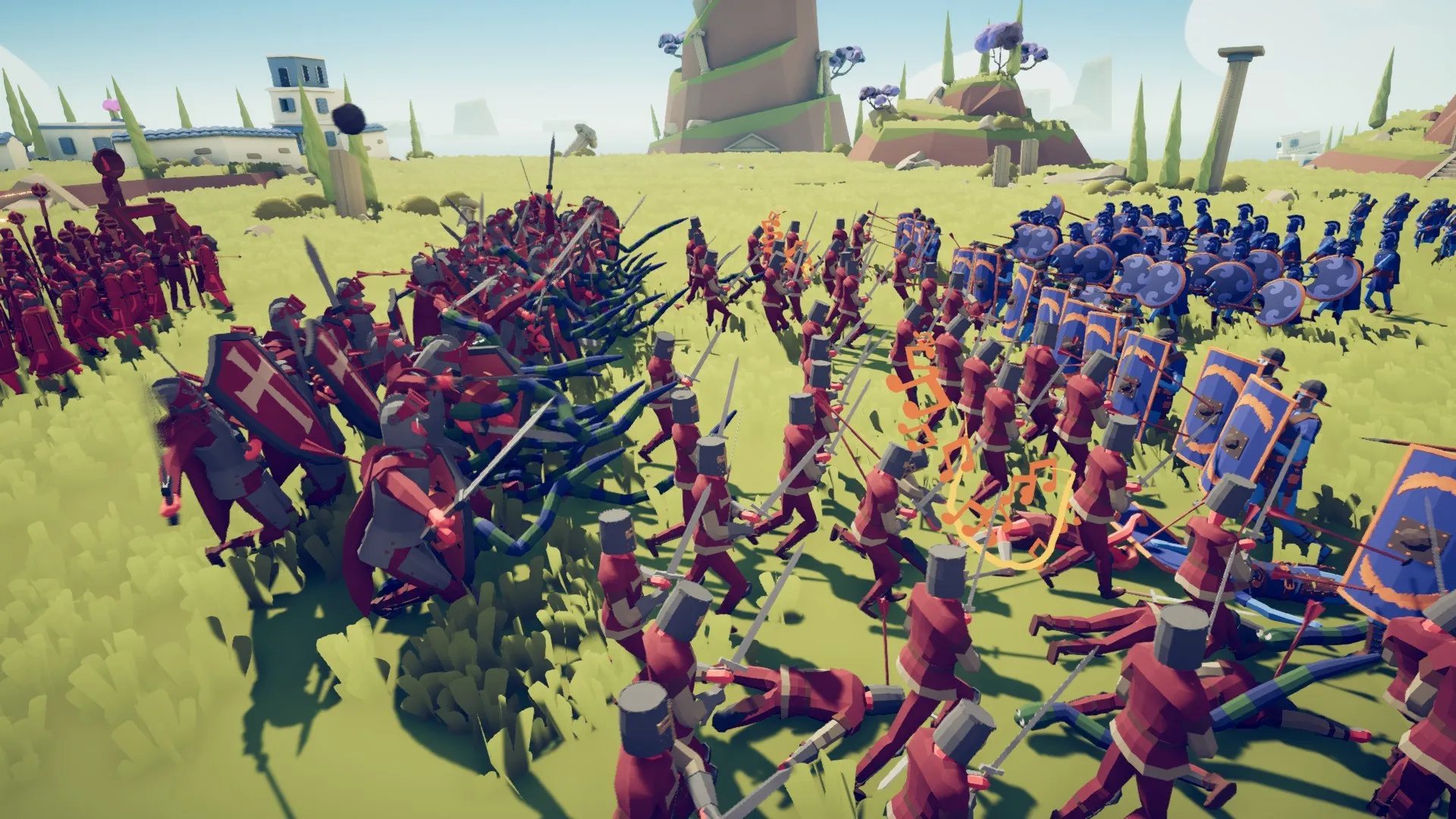
Where you place each unit matters as much as which units you choose. Slight changes in spacing can drastically alter outcomes.
Spacing ranged units prevents them from bumping into each other and interfering with firing lines. Spreading out melee lines helps reduce the effect of splash damage from cannons or dragon breaths.
Key Placement Principles
• Place assassins wide to flank.
• Spread fragile units far enough so AoE attacks don't wipe them out.
• Position heavy hitters behind tanks to maximize survivability.
Small adjustments in formation often win difficult campaign levels with the same army you previously lost with.
7. Mastering Special Units and Knowing When to Use Them
Special units are powerful but situational. You need to understand the right moments to field them.
The Reaper, for example, dominates clustered enemies but struggles when overwhelmed by ranged attackers. Ice Giant is devastating but slow and vulnerable to projectile saturation. Da Vinci Tank offers massive AoE and tankiness, but tight maps reduce its turning ability.
Making good use of special units means recognizing enemy weaknesses. If the opponent is slow, bring fast units. If the opponent is spread-out, bring snipers or ranged units. If the opponent is shield-heavy, bring artillery or melee breakers.

8. Learning Advanced Synergies and Unexpected Combos
TABS thrives on creative experimentation. Some of the strongest strategies emerge from unexpected combinations.
Fun and Effective Combos
• Shield + Ranged Layering: Protect archers behind a moving wall.
• Minotaur Disruption + Archer Volley: Stagger enemies while arrows rain down.
• Snake Archers + Berserkers: Distraction plus mobility pressure.
• Catapult + Knight Line: Impact damage followed by disciplined cleanup.
• Monk + Firework Archer: Knockback control plus single-target burst.
Why Combos Matter
Unit combinations create effects greater than their individual strength. Experimenting with synergy is key to mastering sandbox gameplay.
9. Sandbox Training to Understand Battle Patterns
Sandbox mode is not just for fun—it’s a powerful learning tool. To improve, you must observe patterns and interactions between units.
Run controlled experiments. Test how many archers it takes to kill a knight. Study how ballista bolts travel in different terrains. Watch how units behave when surrounded. Sandbox repetition builds instinct.
Key Sandbox Exercises
• Practice countering every tank unit.
• Identify the most efficient anti-ranged units.
• Test which units perform best as backline anchors.
• Explore flanking patterns with high-mobility units.
The more experiments you run, the better your tactical intuition becomes.
10. Transitioning to Expert-Level TABS Strategy
Once you know the basics, it’s time to think like an advanced commander. Expert strategies revolve around prediction, misdirection, and resource efficiency.
Predicting enemy movement lets you place assassins exactly where they will charge next. Knowing projectile arcs helps you anticipate timing. Understanding ragdoll behavior lets you manipulate physics, like knocking enemies off cliffs or staggering them repeatedly.
Advanced play also involves selectively overspending or underspending to control army density. Sometimes fewer units allow more room for movement. Other times, many small units create a wall that overwhelms stronger enemies.
With these expert concepts, your gameplay evolves from guesswork to calculated chaos.
Conclusion
Totally Accurate Battle Simulator thrives on unpredictability, but strategic players can harness that chaos to create consistent victories. By learning physics, terrain dynamics, unit roles, formations, faction identities, and synergistic combos, you gain full control over the battlefield.
The game becomes far more than a silly ragdoll playground—it becomes a challenging strategic puzzle where every variable matters. Use this guide as your progression path from beginner to expert, and you will not only win more battles but also develop a deeper appreciation for the wild creativity that TABS offers.
160-Character Summary
A deep 2000-word guide covering strategy, units, physics, terrain, formations, synergy, and expert tactics to master chaotic battles in Totally Accurate Battle Simulator.