





RV There Yet? is a quirky, comedic, and deceptively complex road-trip management game where players control a dysfunctional family barreling across the country inside a barely functional RV. While the humor, dialogue, and unpredictable encounters steal the spotlight, the real challenge beneath the laughs is a sharply designed management system. The resource economy—fuel, supplies, repairs, morale, and route choices—returns again and again as the main determinant of success.
But hidden within these layered systems lies a specific, under-discussed issue:
the imbalance between resource generation and route demand, especially in the mid-to-late game.
On paper, the game encourages experimentation with different route types: scenic detours, highways, danger zones, rest stops, tourist traps, and randomized events. But as players progress, these choices begin to bottleneck, forming unintentional difficulty spikes that stem not from intentional design but from the mismatch between what the game asks from the player and what the game lets the player acquire.
This article explores this issue in depth—how it appears, why it compounds over time, how players adapt to it, and how it shapes the overall gameplay experience.
1. Foundations of the Road-Trip System: A Tight Resource Loop
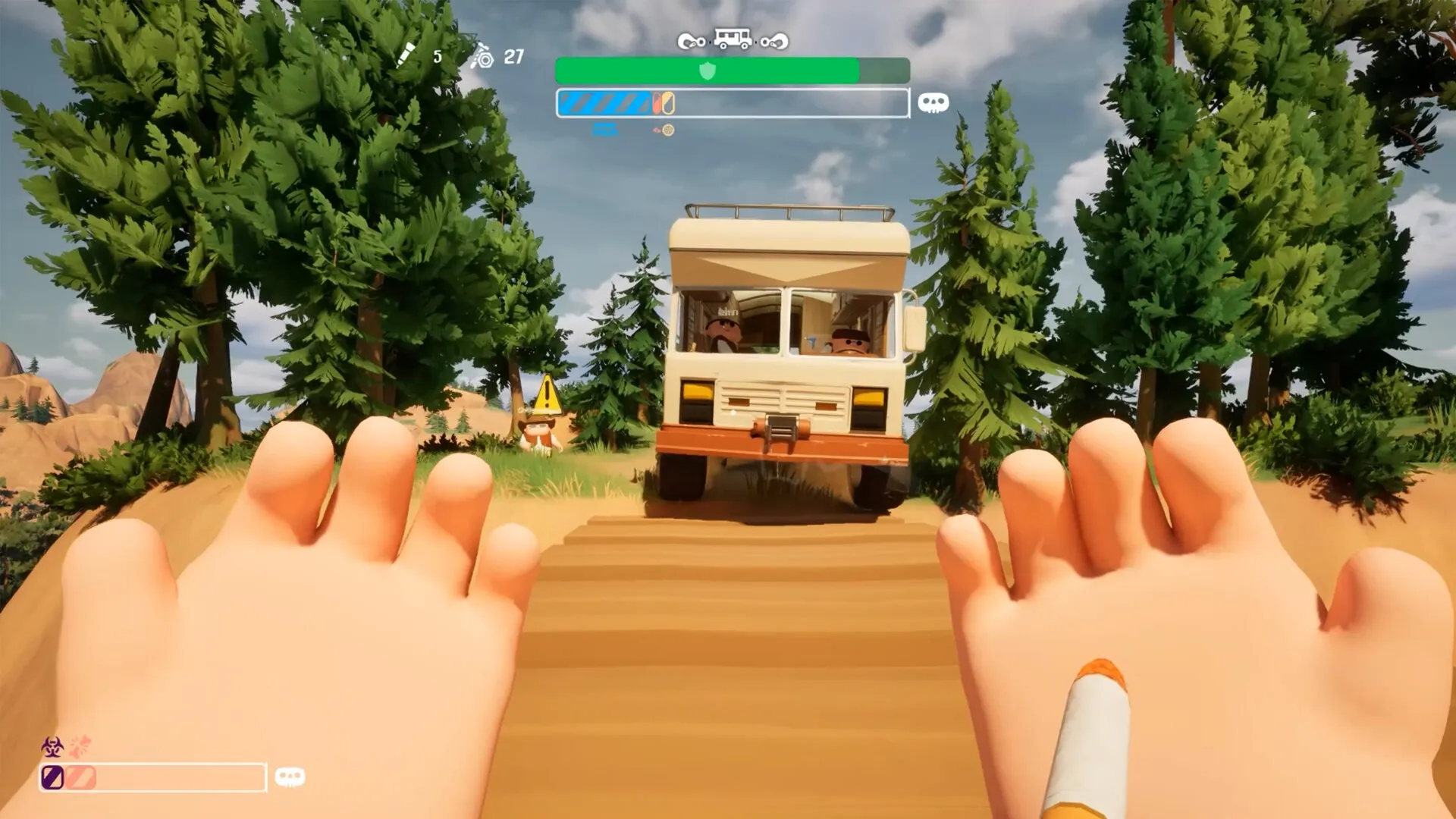
The core gameplay loop of RV There Yet? revolves around maintaining stability across several interconnected resources: fuel, morale, money, repairs, and food. Every mile stretches these systems thinner, and every decision forces players to balance risk versus conservation.
H3: The Intended Loop
The developers clearly intended the loop to feel tight but fair:
- You earn resources through events, landmarks, and map nodes.
- You spend them on repairs, fuel stations, shops, and campsite rests.
- The trip should feel stressful but manageable.
H4: Where Cracks Begin
However, as soon as the routes begin branching more aggressively, the cracks in the system emerge. The game does not scale resource gains fast enough to match the rising severity of route demands.
2. The Moment the Imbalance First Appears
Players usually encounter the imbalance around the second major biome.
By this point, the RV has suffered enough wear, the family has accumulated stress, and resource costs start climbing faster than earnings.
H3: A Shift in Economic Tempo
Early on:
- Fuel is cheap
- Repairs are manageable
- Food is plentiful
- Morale dips are easy to fix
But mid-game introduces:
- Steeper fuel usage
- Harder-hitting road hazards
- Scarcer food events
- More aggressive morale penalties
H4: The Hidden Spike
What makes this spike problematic is that it’s not clearly telegraphed.
Players believe they’re maintaining good balance—until the route suddenly demands more than they’ve been trained to accumulate.
3. Route Variation and Its Unintended Difficulty Curve
RV There Yet? is structured around route diversity. Players can select between:
- Safer, longer roads
- Riskier shortcuts
- Tourist attraction paths
- Supply-rich loops
- Environmental hazard routes
Each path is meant to offer different advantages.
But resource scaling breaks this balance.
H3: High-Demand Routes Outpace Resource Rewards
By mid-game:
- Hazard routes cost more repairs than they reward
- Scenic routes offer morale but drain fuel disproportionately
- Supply routes offer little fuel compared to fuel required to reach them
H4: The Domino Effect
One resource imbalance leads to another:
- Low fuel → forced detours
- Detours → more hazards
- Hazards → repair drain
- Repair drain → money crisis
- Money crisis → forced high-risk choices
Thus the imbalance becomes self-reinforcing.
4. The Role of Randomization in Deepening the Problem
Randomness is the beating heart of the game’s humor and unpredictability. But it also accelerates the resource-route imbalance.
H3: RNG That Compounds Stress
Random events may:
- Break a crucial component
- Drop morale instantly
- Add unplanned fuel drains
- Remove food supplies in one unlucky encounter
These aren’t inherently unfair.
But in a system already stretched thin, the random hits accumulate.
H4: Randomness Without Recovery
The real problem isn’t harmful RNG. It’s the lack of recovery RNG.
Negative events far outpace positive resource events in mid-game routes.

5. Scaling Failure: The RV Can’t Keep Up
The RV itself becomes a symbol of systemic imbalance.
Its repair needs escalate faster than player earnings.
H3: Repairs as a Resource Sink
Every hazard, pothole, or random mishap eats into repair durability.
But repair kits:
- Cost too much
- Offer too little restoration
- Are too rarely found on the road
H4: Permanent Damage Accumulation
Over time:
- Durability drops
- Repair costs rise
- Road hazards become unavoidable
- The RV becomes a liability
The vehicle becomes the bottleneck point for the whole economy.
6. The Morale Spiral: A Parallel Crisis
As resources tighten, morale becomes harder to maintain.
This leads to a spiraling internal conflict system.
H3: Morale Penalties Stack Faster Than Gains
Characters bicker more as resources dwindle.
Penalties include:
- Higher fuel consumption
- Reduced event effectiveness
- Debuffs to skills needed for certain events
H4: The Player Psychology Impact
Low morale isn’t just a number—it feels like narrative failure.
Players feel punished for scarcity that wasn’t their fault.
7. Player Adaptation: How Experts Work Around the Imbalance
Veteran players develop strategies to bypass the intended route system entirely.
H3: Adaptation #1 – Path Minimization
Instead of exploring routes, players:
- Choose shortest paths
- Avoid fun detours
- Take safe roads despite fewer rewards
H4: Adaptation #2 – Hoarding Strategy
Players learn to hoard:
- Fuel
- Repair kits
- Morale boosters
This is the opposite of the intended adventurous playstyle.
List: Player-Discovered Survival Methods
- Route memorization
- Risk elimination
- Efficient but boring repetitiveness
- Avoiding most optional content
These adaptations solve the problem but hurt gameplay diversity.
8. The Late-Game Crisis: The Breaking Point
Late-game routes include:
- Extreme weather
- Road collapses
- Supply droughts
- Multiple branching paths with high cost
The resource imbalance becomes overwhelming.
H3: Fuel vs. Distance
Fuel demands double, while fuel supply sources thin dramatically.
H4: Repairs Become Impossible
The RV begins breaking down faster than repairs can keep up.
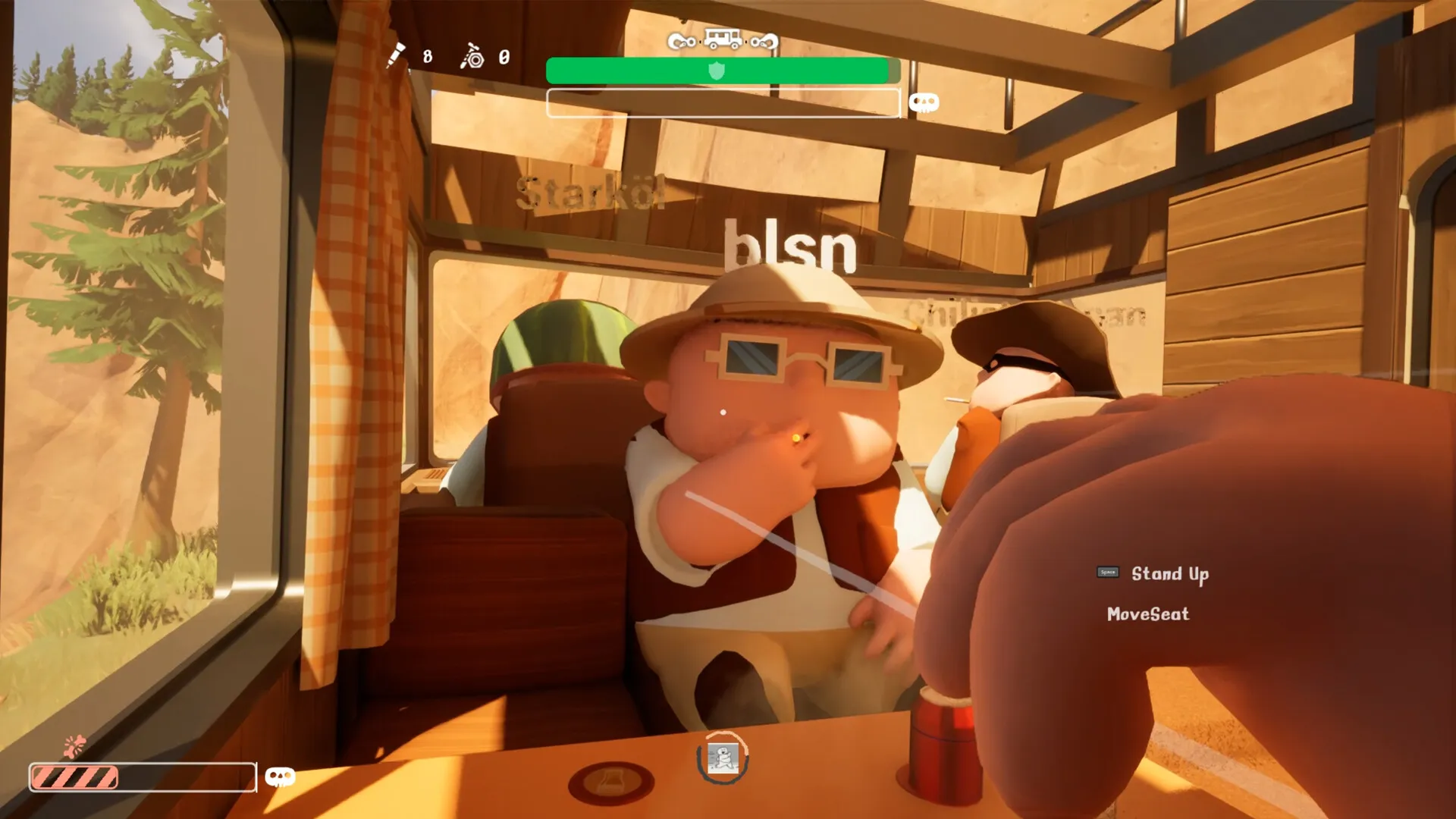
Many players get stuck in a “slow death loop” where they limp from node to node barely holding the vehicle together.
9. The Emotional Toll: When Difficulty Stops Feeling Fun
The greatest tragedy of the imbalance is the emotional shift.
What starts as a funny, chaotic adventure devolves into mechanical stress.
H3: The Tone Break
Players expect:
- Humor
- Spontaneity
- Choice
But they experience:
- Desperation
- Resource starvation
- Forced efficiency
- Frustration
H4: Humor Loses Its Effect
It’s difficult to enjoy comedic events when:
- You’re out of fuel
- Your RV is half-dead
- Characters are fighting
- Every route is a trap
10. What This Imbalance Reveals About the Game’s Design Philosophy
Despite its flaws, RV There Yet? is built with charm and ambition.
The imbalance highlights the tension between narrative whimsy and systemic difficulty.
H3: A Game Caught Between Two Identities
Identity #1: A carefree comedic road trip.
Identity #2: A tight survival-management simulator.
The route–resource imbalance leans heavily toward Survival Simulator—even though the game’s heart is in the comedy.
H4: What Works and What Doesn’t
Works:
- Humor
- Encounters
- Characters
- Dynamic choices
Doesn’t work:
- Resource economy scaling
- Mid-game route balancing
- Repair cost escalation
- RNG favoring penalties over recovery
RV There Yet? is one of those rare games where the charm of the narrative and the chaos of the road-trip premise overshadow the deeper structural systems humming beneath the hood. But as players advance, the cracks in the route–resource economy begin to reveal themselves. The mid-to-late game becomes a battleground not of creative decision-making but of survival against a system that scales too aggressively, demands too much, and rewards too little.
This imbalance transforms intended freedom into forced optimization, turning a comedic, joyful adventure into a stress-driven trek across an unforgiving map. Veteran players learn to adapt, but their adaptations strip away the thematic soul of the game—avoiding exploration, refusing risk, and managing mathematically rather than adventurously.
Understanding this issue is crucial to appreciating not only the game’s strengths but also how its systems unintentionally reshape player experience. RV There Yet? remains a memorable, hilarious ride—but one whose road becomes rougher the further you go.